A friend posted this article: Some real Shock and Awe: Racially profiled and cuffed in Detroit. I was quite horrified of the incident, but putting my little boy, 14 months, blond hair, blue eyes - future white male - to bed I started thinking about racial profiling more analytically.
Racial profiling isn't exactly what we'd normally call racism. We tend to think that racism is what racists do, bad things like calling others names or kicking someone. On the other hand, everybody does profiling, racial or not. We like to know where we have things. Finns are quiet, men don't like to clean, women are sensitive, Africans like to give advice, an so on (the last one is my own category). Similarly, we might think that Somalians are loud, Japanese are hard-working, Roma people steal... well, you can see where this is going.
Unfortunately, racism can also be defined as categorizing people negatively based on their skin color - race, effectively, if there's such a thing. Here we see how profiling can be racism. If we think the Roma steal and Somalis get in gangs and rob others, then we've already stepped over that line. When we expect Latinos to be illegal immigrants and Arabians to be terrorists we're way on the other side.
But what's wrong with this? Doesn't it make the world a safer place? Well, there's two (quite obvious) answers to what's wrong with racial profiling, appart from the racism thing, and we all know that's evil. First, we all know profiling often goes wrong. Even when we do know a lot about some culture or group there will always be people who don't fit. If we're not dexterous enough to understand that, we'll be in trouble when we meet an African who doesn't like giving advice. Besides most of our profiling is not based on lots of personal experience. It can be based on what we read from newspapers or discussion groups, or what others tell us, or even on just one experience we've had. There are problems with all of these. These days everybody knows that the media can give a distorted image of reality. Other people's experiences do that even more.
The second problem is that it's offensive. And this is completely self evident, but we need to remember it. We all hate being falsely accused - it makes it worse if it's just our looks that make us suspicious.
Are people just too sensitive? Well, there have been times and places in history where some group or another has meekly accepted being viewed as something less than others. I think that's even worse - it means that the whole groups self-image is distorted. I'd say it's good that that's not accepted anymore by any group I know of.
Sep 13, 2011

Jul 11, 2011
Mama Bear mode
I just read a post in my friend Reuben's blog about two girls who had a bad experience with a mormon father of their friends (Won't be Friends with Non-Mormons?) In her question to Reuben, a girl told how she had some excellent mormon friends, but one day their father came up to them and told them that his daughters wouldn't be allowed to play with them anymore. The girls never knew the reason. This story is worrying in many ways, but I guess the most likely explanation for the behavior of the dad is that he felt the girls were somehow a bad influence on his daughters and felt the need to protect them. We don't know if he was being overly protective or not. I don't know much at all about the situation, but it made me think about a subject I've wondered about before.
There is something often called the "mama bear mode" that we find good or at least acceptable in parents. Parenting instincts are the most revered instincts, right? And therefore it's commendable when we protect our children in any way that's needed, right? Sure, in many situations. What disturbs me is when this mode makes parents hurt other people. Parents attack (at least verbally) other adults when they feel their children are being slighted, or like in this case, upset other children to protect their own. This example especially worries me. Our own children are of course our main responsibility and we love them, but shouldn't all children be protected from hurt, whether they be ours or someone else's? And talking about adults, those of us who are Christians at least should see other people also as precious.
Attacking others to protect our own children is a very basic instinct. Almost all mammals have it. As humans we can, however, decide to override our instincts. We can even override our survival instinct, and more often we have to ignore our sexual instincts. Why then can't we decide to react slower when we feel our children are threatened (assuming they aren't about to hit a car or something that needs immediate action) and make decisions that spare both our children and the feelings of others? I think it's because of our culture. It's good to be protective, we think. Mama Bear is almost sacred for us.
Before anyone objects I want to say that I think it IS important to protect our children. Sometimes that might mean we have to make someone else upset, I know. However, I think blind admiration of mothers and fathers rushing to snatch their children away from any perceived harm, and lashing out on others at the same time, is not good.
There is something often called the "mama bear mode" that we find good or at least acceptable in parents. Parenting instincts are the most revered instincts, right? And therefore it's commendable when we protect our children in any way that's needed, right? Sure, in many situations. What disturbs me is when this mode makes parents hurt other people. Parents attack (at least verbally) other adults when they feel their children are being slighted, or like in this case, upset other children to protect their own. This example especially worries me. Our own children are of course our main responsibility and we love them, but shouldn't all children be protected from hurt, whether they be ours or someone else's? And talking about adults, those of us who are Christians at least should see other people also as precious.
Attacking others to protect our own children is a very basic instinct. Almost all mammals have it. As humans we can, however, decide to override our instincts. We can even override our survival instinct, and more often we have to ignore our sexual instincts. Why then can't we decide to react slower when we feel our children are threatened (assuming they aren't about to hit a car or something that needs immediate action) and make decisions that spare both our children and the feelings of others? I think it's because of our culture. It's good to be protective, we think. Mama Bear is almost sacred for us.
Before anyone objects I want to say that I think it IS important to protect our children. Sometimes that might mean we have to make someone else upset, I know. However, I think blind admiration of mothers and fathers rushing to snatch their children away from any perceived harm, and lashing out on others at the same time, is not good.
Jul 2, 2011
My Favourite Things
I'm never tired of ranting, but lately I have been very lazy about writing down my rantings. It takes a lot of energy to try to see something from all points of view and discuss it as deeply as possible. I decided to make a questionneer to find out what I should rant about and in stead write a blog entry about my favourite blogs.
I'm one of those blog readers who mostly likes to read things by my friends. Also, I really like blogs that are completely different from mine. Happy blogs, funnily written, with lots of pictures and not much text, reasonably often updated, by special friends of mine. Here are my three favourites. (I downloaded your pictures for advertising purposes only, dears!)

Puhti. This blog is in Finnish and English. The writer takes lots of photos and they're beautiful. All the sweet walks with her children in the nature makes, the fourth child's playing of tuba and the joyous yongest child make the reader feel like her life's a bliss although we might suspect she's editing out some annoying stuff... She sews pretty clothes, toys and other things and knits inventive bracelets, socks and such. Feel good blog. And I love love love the writer - she's one of my absolute favourite people in the world.

Lista Asioista. The blog is written by one of my best friends, only in Finnish. She writes lists of things. Not too heavy reading. Occasionally she also includes her Illustration Friday drawings. She's a great artist - style is sort of illustratorish. Lately she's been inventing art therapy for adults - fun stuff that don't require much skill but can make you sit and play artist for hours.

Five. This is a newer blog, in English only, and it's already one of my favourites. You know how blogging often makes ordinary lives seem sort of glamorous? Well, knowing these five sisters (actually I only know three of them, and have once talked on phone with a fourth) I think they manage to make rather glamorous life seem ordinary, or at least attainable. Ok, so I might not get to travel to Korea and Hungary in the same year, or sing in an opera, but they write about it like all the readers were close friends (knowing how large their circle of friends is that's really possible) and they were just chatting on phone, so that makes me feel like I'm part of all the glamor. Also, I'm not too excited about mama bloggers but One manages to make it interesting (it helps that she's the only mama so far among the five...)
I'm one of those blog readers who mostly likes to read things by my friends. Also, I really like blogs that are completely different from mine. Happy blogs, funnily written, with lots of pictures and not much text, reasonably often updated, by special friends of mine. Here are my three favourites. (I downloaded your pictures for advertising purposes only, dears!)

Puhti. This blog is in Finnish and English. The writer takes lots of photos and they're beautiful. All the sweet walks with her children in the nature makes, the fourth child's playing of tuba and the joyous yongest child make the reader feel like her life's a bliss although we might suspect she's editing out some annoying stuff... She sews pretty clothes, toys and other things and knits inventive bracelets, socks and such. Feel good blog. And I love love love the writer - she's one of my absolute favourite people in the world.

Lista Asioista. The blog is written by one of my best friends, only in Finnish. She writes lists of things. Not too heavy reading. Occasionally she also includes her Illustration Friday drawings. She's a great artist - style is sort of illustratorish. Lately she's been inventing art therapy for adults - fun stuff that don't require much skill but can make you sit and play artist for hours.

Five. This is a newer blog, in English only, and it's already one of my favourites. You know how blogging often makes ordinary lives seem sort of glamorous? Well, knowing these five sisters (actually I only know three of them, and have once talked on phone with a fourth) I think they manage to make rather glamorous life seem ordinary, or at least attainable. Ok, so I might not get to travel to Korea and Hungary in the same year, or sing in an opera, but they write about it like all the readers were close friends (knowing how large their circle of friends is that's really possible) and they were just chatting on phone, so that makes me feel like I'm part of all the glamor. Also, I'm not too excited about mama bloggers but One manages to make it interesting (it helps that she's the only mama so far among the five...)
May 30, 2011
Democracy, again
"If you ask people if they support affirmative action they say yes. If you ask them if they support positive discrimination they say no" said my husband, explaining to me how the Finnish term "positiivinen syrjintä" is translated into Finnish. I think we need a new name in Finnish too.
I was again sadly reminded of the problems of democracy this week. The True Finns (a Finnish populist political party) published a proclamation against racism. However, they let a certain J H-a write the proclamation. Mr H-a is widely considered to be racist himself, or xenophobe, or at least have sympathies with very racistic ideas. The proclamation came out condemning any kind of discrimination, including affirmative action to help minorities or groups in weaker position. Soon after this, the chair of the youth organization of the National Coalition Party (biggest of the Finnish parties since last election) wrote an article supporting this position, admitting only the need for affirmative action to help disabled people. He especially condemned affirmative action for women or racial/cultural minorities. The biggest national newspaper, in a typical simplified move, made a questionnaire on their pages: Do you approve of (positive discrimination) affirmative action? 80% of readers answered "no".
Someone pointed out that most people don't even know what affirmative action is about. I think even less would be able to follow the reasoning for why it might be good and why it was written in the Finnish constitution.
Democracy. Everyone should vote, but only a fraction of voters will actually study any subject. Finland doesn't have elections on actual issues, just representatives, so the idea is that in stead of me having to study everything under the sun my representative will, and he or she may then be able to give an informed vote on subjects. Yes, but we still want our representatives to vote as we would, however misinformed we are. Many people choose a representative before the elections through an "election machine" - computer questionnaire that shows which candidate's thoughts are closest to the voter's. The questions range from ethics to economy. To answer them most people will need to rely on a vague feeling on the subject - a feeling that is very easily manipulated by clever use of words. Like the difference between "affirmative action" and "positive discrimination" shows.

Winston Churchill seems to have said "democracy is the worst form of government, except for all those other forms that have been tried from time to time." That's how I feel. All the other systems suck - but democracy is no good either. It would work perfectly if people were well-informed, friendly towards their neighbors, honest and humble, with no hunger for power - but then again, so would almost any other system too.
I was again sadly reminded of the problems of democracy this week. The True Finns (a Finnish populist political party) published a proclamation against racism. However, they let a certain J H-a write the proclamation. Mr H-a is widely considered to be racist himself, or xenophobe, or at least have sympathies with very racistic ideas. The proclamation came out condemning any kind of discrimination, including affirmative action to help minorities or groups in weaker position. Soon after this, the chair of the youth organization of the National Coalition Party (biggest of the Finnish parties since last election) wrote an article supporting this position, admitting only the need for affirmative action to help disabled people. He especially condemned affirmative action for women or racial/cultural minorities. The biggest national newspaper, in a typical simplified move, made a questionnaire on their pages: Do you approve of (positive discrimination) affirmative action? 80% of readers answered "no".
Someone pointed out that most people don't even know what affirmative action is about. I think even less would be able to follow the reasoning for why it might be good and why it was written in the Finnish constitution.
Democracy. Everyone should vote, but only a fraction of voters will actually study any subject. Finland doesn't have elections on actual issues, just representatives, so the idea is that in stead of me having to study everything under the sun my representative will, and he or she may then be able to give an informed vote on subjects. Yes, but we still want our representatives to vote as we would, however misinformed we are. Many people choose a representative before the elections through an "election machine" - computer questionnaire that shows which candidate's thoughts are closest to the voter's. The questions range from ethics to economy. To answer them most people will need to rely on a vague feeling on the subject - a feeling that is very easily manipulated by clever use of words. Like the difference between "affirmative action" and "positive discrimination" shows.

Winston Churchill seems to have said "democracy is the worst form of government, except for all those other forms that have been tried from time to time." That's how I feel. All the other systems suck - but democracy is no good either. It would work perfectly if people were well-informed, friendly towards their neighbors, honest and humble, with no hunger for power - but then again, so would almost any other system too.
May 4, 2011
USA number one

I was looking at phone numbers one day and was surprised to see that the country code for the USA was 1. I didn't know any country got to have that and said something to the effect to my dear husband (who is American). He said "That's probably what you get for inventing the telephone." Oh.
Yes, the US did invent the telephone and many other modern miracles too. Older miracles are invented in other countries, and just recently this phenomenon we call globalization is making it hard to say where anything is invented, since everything seems to be multi-national.
I might be a bit jealous of America. You see, Finland's country code on telephone is 358. We might have invented the cell phone, but that's a bit hard to prove.
America seems to want to be number one in everything else too. I guess that's just natural for a competetive nation. We participate in sports because we want to win - be number one - and for America everything is a sport in that way. During the cold war America was competing hard with the Soviet Union to be the number one superpower. After the cold war the Americans felt comfortable in their ultimate power. There was no other country that could even come close in financial or military power, or, as many Americans felt, innovation, freedom, courage or other values Americans admire.
Lately there has been a bit of a fall down to earth. China is seriously competing with America about the spot of the strongest economy. America might even be only number two in some respect. This could not be tolerated. As America's number one position was threatened, down went the president's approval ratings (first president Bush's, then president Obama's.) Obama also received critics for his foreign politics. In Libya Obama didn't take a leading role (thus showing the number one position) and the leader turned out to be (shudder) France in stead. Was Obama giving France the chance to be number one?
Just recently Americans were comforted by Obama's independent decision to go to another country's soil and execute America's number one enemy, Osama bin Laden. This reminded everyone that America is still number one, and can and will do whatever it wants. Obama's approval ratings immediately went up 11% (but don't worry, it won't last long.)
For any American this might seem nothing to complain about - as long as America only does good, not evil, in the world, then why should it not be number one? (I'm not going to discuss whether America only does good and no evil in the world - that question would need a whole book.) However, nations of the world are a bit like children in a playground. If one child always wants to be the first and decide what the children should play, the others get upset. It doesn't help if the child is the biggest and strongest of them, in fact, it may make things worse. The more that child emphasizes that it is number one, the more the other children resent it, even if all the child's commandments or suggestions were reasonable.
Every nation wants to be an equal voice - except for those that want to be a bigger voice than others. That is the strenth of the only truly international organisation, UN. (Ok, we could discuss how equal nations are in the UN, but to be honest, there is no other organization that even comes close.) Many Americans don't like the UN. Many others don't like it either, since it is so slow and full of conflict. I love it for the same reason - the conflict means that no country can actually pull its own agenda through. If there's conflict in the UN that is because there's conflict in the world. Nations don't think alike on issues. However, the UN is a place where they can try to work them through - and in matters of culture (UNESCO) and protection of children (UNICEF) it seems to be working at least a bit.
One more thing. The USA might be number one in many things, I'm sure, but a recent trip showed me it's not the only number one in telephone country codes. Canada shares 1 with the USA.
Mar 15, 2011
I don't want to rant....
... when people are sad and lost.
Night before yesterday baby woke up several times for a cold and between them I lay awake for a strange itching rash. These couple of days have been strange. However, we're far better off than friends in Japan. Or Libya (I don't know anyone from there but somehow the world is such a small place these days that war always feels close.) Was crying reading the news about all the missing people in Japan. Friends here, because of similar heart ache I'm sure, made quilts to send there - I couldn't make them but could, at least, help with child care.
Looking at news like this I just can't understand why we should first help our own people and then, in the possible situation where no-one in our country needs help and there is no budget deficit, we could consider helping others. No says I! My neighbour is the one that needs my help, no matter what language, culture or religion.
Hoping for a better future. Finns, go vote.
Night before yesterday baby woke up several times for a cold and between them I lay awake for a strange itching rash. These couple of days have been strange. However, we're far better off than friends in Japan. Or Libya (I don't know anyone from there but somehow the world is such a small place these days that war always feels close.) Was crying reading the news about all the missing people in Japan. Friends here, because of similar heart ache I'm sure, made quilts to send there - I couldn't make them but could, at least, help with child care.
Looking at news like this I just can't understand why we should first help our own people and then, in the possible situation where no-one in our country needs help and there is no budget deficit, we could consider helping others. No says I! My neighbour is the one that needs my help, no matter what language, culture or religion.
Hoping for a better future. Finns, go vote.
Mar 6, 2011
Children and the environment

"I'm going to be a park ranger a--nd a violinist a--nd an artist!"
"How are you going to run 3 jobs all together?"
"First, in the morning, I'm going to look for people who're trying to kill animals and trees. Then, I'm going to play the violin to the animals in the forest. Last, I'm going to draw pictures of them."
Discussion by K and his mother S made me once again think about how children perceive the environment. I think all children are born environmentalists (no, there is no research done and I can't prove it since we don't grow in a vacuum and the influences of the parents and the rest of the world come into play really quickly.) Children, trees and animals belong together, and what more, environmental conservation tries to conserve the nature to future generations, that is, our children.
I could be like Kotaro too. Unfortunately I've been sort of passive in my environmental endeavors lately, reduced to shaking my head and complaining about things.
The part I don't get is who doesn't want to conserve the wild places and save wild animals (at least cool mammal-type animals)? I just heard the new House leadership (to those who don't know, the House of Representatives, being part of the US Congress that consists of the Senate and the House - why there are two I don't know, since it seems to make them just slower... some kind of leftover from the English system) decided to get styrofoam cups and plastic forks back into the cafeterias. (They did have valid-sounding reasons but I'm not buying.) Who would like to do such a thing? Or mountaintop removal mining, now renamed to make it sound better - who on earth would go and destroy a whole mountain to give us coal? You'd imagine people would try any other things first. Or, in Finland, the devastating clear cutting of forests? We noted that you cna hardly find a view between Kokemäki and Koli (the trip we took) that didn't have one area of clear cut forest sticking out like a sore thumb.
If Kotaro and his age group were in charge these things wouldn't happen.
As a philosopher (and not being Kotaro's age group) I have to be a realist and see things from different angles - I can see why many forest owners would cut their forests clear, or why the plastic forks came back, why coal is mined in a number of dirty ways and why bears and wolves are hated where ever they come in close proximity to humans. However, I'm saying none of these reasons (and I won't even start writing them here) are good enough. We need to save wild nature and bears and wolves for Kotaro. We need to keep the Appalachians intact (those we still can save at least). We need to try our best that humans don't influence the global temperatures so that the ice in the poles melts and polar bears have no more places to go. If we have to sacrifice to do this, so be it. Otherwise the children are left with just those parts of nature that manage in the environment humans have created even better than humans themselves: cockroaches and rats and those animals and birds that can survive on our refuse.
(I guess I need to be more active than just writing one blog a year about the subject.)
Feb 18, 2011
About working mothers and stay-at-home ones.

To Virpi
Helsingin Sanomat had a most provoking column a couple of days ago. I know Virpi Salmi, the author of the column, isn't alone with her thoughts, and wanted to write a response. I realize a true response needs to be longer than what I can write on the discussion page, so here goes. TO those of you who can read Finnish, here is Virpi's article.
Women have indeed a fairly equal situation to men here in Finland, but there is a difficulty. Virpi points out that when the government pays money for mothers to stay at home with their children until they are three years old, that causes many highly educated women to stay out of work during this time. For the advantage of the society women should go to work, says Virpi, not stay at home - unemployed as it is.
I think Virpi's writing points out another serious flaw in our (Finnish) society. (I'm referring to myself as a Finn in Finland in this blog despite not living there anymore.) We have, as most countries don't, a unique situation: a mother can choose to go to work or to stay at home with her child. In the US the situation is often one of financial realities: a mother staying at home has no income, so if the father doesn't make enough money for the family to survive the mother has to go to work too. However, in the US daycare is not free and can in fact be extremely expensive, so if there are no grandparents to help out it might be cheaper for the mother to stay at home after all, depending on her income level. Maternity leave is fairly short, depending on your place of employment, and you don't get paid during it. In Finland it's different - paid maternity leave can be up to a year and after that one of the parents can decide to stay at home with the child and be paid a small amount of money by the government, as a compensation for not putting the child in the free day care. Few fathers use this, but most mothers do. Those mothers who are career-oriented can go to work and use this same free day care system.
The flaw I see is this: in stead of being grateful about this system that our sisters in the 1970's and 1980's put up, we tend to guilt those who choose differently from us. Mothers who stay at home feel and sometimes even say that the others are not good mothers, without properly maternal feelings and so on. The mothers who work are equally vehement against their lazy counterparts at home. "Working mothers do the same as stay-at-home mothers but much more efficiently" - "Working mothers sacrifice their children for their career" etc. The children's good is used by one side then the other.
Why couldn't it be good for the child if the mother gets to do what she enjoys and is good at? And that isn't always a paying career, just saying.
Virpi think that what's good for the society is at least clear. I say it's not that clear at all - free child care costs a lot of money for the society. Mothers who stay at home don't get paid money and therefore don't pay taxes, but they save money for the society and often also for the household (although not necessarily, depending on what they do with their days...) The cheapest thing for the society would be for those to take care of the children who already can't work for some reason, namely retired grandparents and - sorry, Virpi - unemployed parents, friends or relatives. I have to point out that today's society seems to spit out quite a lot of unemployed people, so seems like there aren't quite enough jobs for even those highly educated women. The second cheapest measure would be for families to pay for childcare (but this would mean many couldn't afford it), or to put children in huge groups and have one adult preside over them, but this all agrees is cruel. Day cares need one adult for each five babies (didn't check this, might be less babies), otherwise we consider it a bad day care.
Is the education going to waste? In day cares in Finland most caretakers need a university degree - Masters. We seem to think raising children requires education. So maybe the problem is that the mothers have education in wrong fields? Well, probably neither Virpi nor anyone else feels the country should be filled with wanna-be mothers with only early childhood education degrees. In fact, I firmly believe that adequate education in almost any field gives a bonus in raising the next generation.
I say, let the families make their own decisions, hopefully well-informed, educated decisions but their own! Mothers can stay at home - let's be grateful about that - and fathers can too - but neither one of them has to. That's the system that was decided on by the idealistic builders of the well-fare state.
Feb 8, 2011
Bilinguality
... that can't be a real word, can it?
Been working on it. My boy doesn't talk yet but of course language development starts immediately when a baby is born if not earlier. I'm happy that I have two sisters with bilingual kids (Finnish-Swedish) so I know some things that work and others that don't work. I've also seen some Finnish mothers trying to teach their children Finnish in America. Comparing these is helpful. Here are some tips I've received or figured out myself:
If you want to raise a child bilingual you have to stick to it. It might offend friends or grandparents (hopefully not I:s grandparents) that they don't understand you when you speak to your child, but if you start making exceptions they will get more and more frequent until...
It's very difficult to raise a bilingual child in America. English is practically the only language they ever hear here, unless you watch Spanish TV (most don't), so they don't get exposed to many languages. Things are easier in Finland since they might hear TV in four-five languages.
If a child doesn't have a community of said language speakers (and the mother is the only one speaking it) he will grow up understanding it but will have an accent while speaking. (This creeps me out - how can you have an accent on your mothertongue, different from your mother's accent?)
The parents must always put extra effort to language-related things. You must speak good language because nobody else will... and also, you really have to speak all the time.
Books and films and things like that help a lot. I want to get a great Finnish library.
So, after all this trouble, why bother? Is it important in any way to be bilingual? Well, apart from the fact that knowing two languages actually helps you to learn more (the different structures of languages isn't so much a mystery, or the differences in pronounciation) or that it might be that bilinguality also boosts your language abilities in general (only if they're really strong languages both), there isn't much reason. Except that language and culture go together and I love my language and culture. I couldn't imagine that my children wouldn't be Finnish in both language and culture.
Been working on it. My boy doesn't talk yet but of course language development starts immediately when a baby is born if not earlier. I'm happy that I have two sisters with bilingual kids (Finnish-Swedish) so I know some things that work and others that don't work. I've also seen some Finnish mothers trying to teach their children Finnish in America. Comparing these is helpful. Here are some tips I've received or figured out myself:
If you want to raise a child bilingual you have to stick to it. It might offend friends or grandparents (hopefully not I:s grandparents) that they don't understand you when you speak to your child, but if you start making exceptions they will get more and more frequent until...
It's very difficult to raise a bilingual child in America. English is practically the only language they ever hear here, unless you watch Spanish TV (most don't), so they don't get exposed to many languages. Things are easier in Finland since they might hear TV in four-five languages.
If a child doesn't have a community of said language speakers (and the mother is the only one speaking it) he will grow up understanding it but will have an accent while speaking. (This creeps me out - how can you have an accent on your mothertongue, different from your mother's accent?)
The parents must always put extra effort to language-related things. You must speak good language because nobody else will... and also, you really have to speak all the time.
Books and films and things like that help a lot. I want to get a great Finnish library.
So, after all this trouble, why bother? Is it important in any way to be bilingual? Well, apart from the fact that knowing two languages actually helps you to learn more (the different structures of languages isn't so much a mystery, or the differences in pronounciation) or that it might be that bilinguality also boosts your language abilities in general (only if they're really strong languages both), there isn't much reason. Except that language and culture go together and I love my language and culture. I couldn't imagine that my children wouldn't be Finnish in both language and culture.
Jan 30, 2011
Being born liking cars?

Sorry, mothers, boys are not born liking cars. Otherwise, imagine all those little boys 200 or more years ago, liking them but not knowing what they like, a shapeless yearning... Nope, liking cars is not inborn and I will say this even if the first word of my boy happened to be 'auto'.
I've lately heard many feminist mothers (and some others too) complain (or just explain) how they worked hard on gender neutrality in toys and were thwarted in their efforts by their boy who wants cars. Or girl who wants to wear pink although the color isn't even present in their house. I still say liking cars isn't inborn!
If something is inborn about liking gender-specific toys (which I'm not certain about) it's the fascination of a certain gender role. Many boys might be excited in things that are culturally perceived as masculine (probably they don't explain it in these words to their parents, though). Not all, of course. And many girls might find overly feminine things attractive. What they see as masculine or feminine has to change, though, else boys would still just like horses and NOBODY would like cars.
And here comes the other part: if a child is attracted to things that are culturally perceived as masculine or feminine, and their parents were very vigilant in trying to raise their kids gender neutrally, what's the explanation? I think it's that there's no way you can raise your child actually gender neutrally. They don't grow in a vacuum - if you can be completely gender neutral (which I don't think is possible at all, but that's a whole different tweet) the rest of the world isn't.
I won't even try. But I think I'll go for trains in stead of cars, much more ecological. And animals, and dolls too if he wants them, and I think he'd be excited about a little kitchen. But I'll try not to complain if he only wants to play with his toy tigers and scorns the pots and pans.
Jan 8, 2011
Quotas or no quotas?
I'm a bit worried about gender quotas. If say a magazine has them, wouldn't it be possible that they would just be scrambling around to fill them instead of thinking of quality?
But if a magazine doesn't think about gender at all, will they end up not publishing any women writers just because they're much too used to their men? (Or for some other, more nefarious reason...) And will all the women writers then just end up writing in so-called women's magazines since they can't get in to any others?
This is what happened in the New Yorker. Anne Hayes noticed that in several issues (two were mentioned specifically) there were only a couple of pages written by women despite the fact that there are many writing women for them to have. In fact the magazine itself has many women editors. So Anne decided to return the latest offending issue, displeased with it, like a box of cereal that's flawed.
I think there should not be gender quotas - in a perfect world. In OUR world however, if women don't make a noise they are still overlooked. Still. And Anne's quota is so modest too, just five out of thirteen. Don't think five women writers should be hard to find at all, and quality need not suffer.
Here's Anne's letter on facebook.
But if a magazine doesn't think about gender at all, will they end up not publishing any women writers just because they're much too used to their men? (Or for some other, more nefarious reason...) And will all the women writers then just end up writing in so-called women's magazines since they can't get in to any others?
This is what happened in the New Yorker. Anne Hayes noticed that in several issues (two were mentioned specifically) there were only a couple of pages written by women despite the fact that there are many writing women for them to have. In fact the magazine itself has many women editors. So Anne decided to return the latest offending issue, displeased with it, like a box of cereal that's flawed.
I think there should not be gender quotas - in a perfect world. In OUR world however, if women don't make a noise they are still overlooked. Still. And Anne's quota is so modest too, just five out of thirteen. Don't think five women writers should be hard to find at all, and quality need not suffer.
Here's Anne's letter on facebook.
Jan 3, 2011
Resolutions... wishes...
A couple of years ago I decided not to make any New Years resolutions. In stead I expressed New Years wishes. The good part is that those weren't really dependent on me. The downside is that the reason I did this is a Finnish ailment: pessimism. Why try to change since it didn't work last year? How could I do any better next year?
Well well. Last year I made resolutions anyway, even while realizing that I might not be able to fulfill them. I thought that two resolutions would be enough: I'd give birth to a baby (very safe: he was about to come out anyway) and I'd finally finish my novel, big project that has been going on for way too long. Not finished, I'm sad to say. It seems my first resolution messed with my second one. I started off fine but then got too heavy and tired and then too busy and then too tired again... you know how it is.
With a 50% success rate I might try again, however.
It seems like I've lately had trouble with faith-related issues, so I'll work on that. Decided.
Baby needs mama to give a strong foundation in the Finnish language. I'll work on that. Decided.
Novel still needs to be finished. (It can't be impossible with 250 pages down already?!) Decided.
What's the 50% success-rate for this I wonder? Slight improvement in faith-related issues, no novel but excellent use of Finnish? Or something else?
Well well. Last year I made resolutions anyway, even while realizing that I might not be able to fulfill them. I thought that two resolutions would be enough: I'd give birth to a baby (very safe: he was about to come out anyway) and I'd finally finish my novel, big project that has been going on for way too long. Not finished, I'm sad to say. It seems my first resolution messed with my second one. I started off fine but then got too heavy and tired and then too busy and then too tired again... you know how it is.
With a 50% success rate I might try again, however.
It seems like I've lately had trouble with faith-related issues, so I'll work on that. Decided.
Baby needs mama to give a strong foundation in the Finnish language. I'll work on that. Decided.
Novel still needs to be finished. (It can't be impossible with 250 pages down already?!) Decided.
What's the 50% success-rate for this I wonder? Slight improvement in faith-related issues, no novel but excellent use of Finnish? Or something else?
Dec 17, 2010
Language minorities
Sometimes I think we people are not very generous. Take the position of minority languages. In most countries minority languages have difficulties even existing. Russia is a great example. Even in a western country like the UK, Welsh and Gaelic are seriously struggling, and nobody knows how many generations will speak those languages fluently.
Then there's Finland and Canada. Finland has some struggling official minority languages (the Same languages in Lapland) and one official minority language that's not struggling in the same way, Swedish. Besides these there are of course several unofficial ones. The problem in the language majority's eyes seems to be the Swedish. Their situation in Finland is apparently very much like the French language situation in Canada. It's a second official language of the country, so anyone should get service in any government offices in Swedish. Also, as Swedish speaking Finns have to study Finnish at school, Finnish speaking Finns have to study Swedish. And they hate it so much! In fact, this hatred sometimes envelopes all the Swedish speaking Finns too. They are happier than Finns, they seem to be richer than Finns (this is only true about a small part of Swedish speaking Finns, but since those are the very visible ones...) and they sing better and even write better than Finns (well, at least Tove Jansson, Bo Carpelan and Kjell Westö do in my opinion)!
People hate minorities that do as well, or sometimes better in their eyes, as the majority. Minorities should suffer. Minorities should content themselves with speaking the majority language.
Only, as majority language speakers we have no clue how hard minority languages are to maintain. At school cool kids sometimes speak Finnish on breaks. If they didn't have their own schools - or were in the same complex even as Finnish speakers - how long until Swedish would only be spoken during lessons? And how many of those kids would eventually speak Finnish to their kids?
I was raised in a Swedish speaking village and went to a Swedish speaking school. Obviously, I'm partial. But I'm partial for the rights of other minority languages too. And, incidentally, I think Spanish should be compulsory at school in America!

(Image of Moomin troll from Skolverkets modersmål pages. Oy Moomin Characters Ltd. All of the Moominvalley characters are globally registered trademarks.)
Then there's Finland and Canada. Finland has some struggling official minority languages (the Same languages in Lapland) and one official minority language that's not struggling in the same way, Swedish. Besides these there are of course several unofficial ones. The problem in the language majority's eyes seems to be the Swedish. Their situation in Finland is apparently very much like the French language situation in Canada. It's a second official language of the country, so anyone should get service in any government offices in Swedish. Also, as Swedish speaking Finns have to study Finnish at school, Finnish speaking Finns have to study Swedish. And they hate it so much! In fact, this hatred sometimes envelopes all the Swedish speaking Finns too. They are happier than Finns, they seem to be richer than Finns (this is only true about a small part of Swedish speaking Finns, but since those are the very visible ones...) and they sing better and even write better than Finns (well, at least Tove Jansson, Bo Carpelan and Kjell Westö do in my opinion)!
People hate minorities that do as well, or sometimes better in their eyes, as the majority. Minorities should suffer. Minorities should content themselves with speaking the majority language.
Only, as majority language speakers we have no clue how hard minority languages are to maintain. At school cool kids sometimes speak Finnish on breaks. If they didn't have their own schools - or were in the same complex even as Finnish speakers - how long until Swedish would only be spoken during lessons? And how many of those kids would eventually speak Finnish to their kids?
I was raised in a Swedish speaking village and went to a Swedish speaking school. Obviously, I'm partial. But I'm partial for the rights of other minority languages too. And, incidentally, I think Spanish should be compulsory at school in America!

(Image of Moomin troll from Skolverkets modersmål pages. Oy Moomin Characters Ltd. All of the Moominvalley characters are globally registered trademarks.)
Dec 15, 2010
non-holiday post
Sorry, today I thought, once more, about skin color. Oh, I thought about Christmas too, a bit, but that wouldn't make much of a post.
The question of today was: what will we teach our child about this skin color issue?
My decision was (and husband might agree) that we will first teach him that skin color doesn't matter. This teaching should mostly be done non-verbally, only if there is an issue should it be discussed. Issue could be child asking, or situation seen.
However, a couple of years later we will also teach our child that skin color has always mattered. Hopefully at this point he will already take people as they are. I don't want him to become one of us whites who thinks black people are making an issue out of nothing - I want my child to understand how privileges define his world, and above all, that being a white male he can't get an idea of what it is like to be in America, or Finland, as black or as female.
Maybe this will eventually help him to create a world where people in fact aren't defined as white or black and skin color is pinkish-yellowish, or brownish beigeish, or deep brown, or copper-toned with slight tinge of yellow... and all of these are admirable.
How to teach this and when this should be taught is another matter. I have no clue. Any ideas?
The question of today was: what will we teach our child about this skin color issue?
My decision was (and husband might agree) that we will first teach him that skin color doesn't matter. This teaching should mostly be done non-verbally, only if there is an issue should it be discussed. Issue could be child asking, or situation seen.
However, a couple of years later we will also teach our child that skin color has always mattered. Hopefully at this point he will already take people as they are. I don't want him to become one of us whites who thinks black people are making an issue out of nothing - I want my child to understand how privileges define his world, and above all, that being a white male he can't get an idea of what it is like to be in America, or Finland, as black or as female.
Maybe this will eventually help him to create a world where people in fact aren't defined as white or black and skin color is pinkish-yellowish, or brownish beigeish, or deep brown, or copper-toned with slight tinge of yellow... and all of these are admirable.
How to teach this and when this should be taught is another matter. I have no clue. Any ideas?
Dec 6, 2010
Does Christmas translate to joulu?

A week ago was the first Sunday of Advent. Advent is something I learned at school. My teacher taught me it is waiting for Christ (Finnish schools were definitively more Christian and more Lutheran when I was a kid). On the first Sunday (actually the Monday, of course, no school on Sunday) in Swedish-speaking schools we lit up one candle from a four-candle holder and sang Hosanna David's Son and talked about Christ's triumphal entry into Jerusalem.
I was so sad this year that nobody even realized it was First Sunday of Advent.
There's an irony in all this. In Finland I had just started liking Christmas again. I had been suffering from a serious Bridget Jones syndrome ("once again I am humiliatingly spending Christmas Eve alone in my parents' house in a single bed") but then along came Current Husband, who, not prone to depression anyway, loved all kinds of Christmases, Finnish or American. So I spent two nice Christmases with him in Finland, enjoying how I enjoyed Christmas again, and then moved to America. Now I'm wondering whether I'll ever have joulu again.
Joulu is, for me, a Christmas tree (always a fir tree or spruce, whatever the difference between those two, never a pine tree) with a star on top, loads of Christmas presents and huge Christmas meal consisting of traditional Finnish foods and lots and lots of fish, all on Christmas Eve. All of this (except maybe the presents) I hated for several years, feeling it underlined my singleton status... but now I'd like it. Only, now I have a Christmas tree at my in-laws, and it might be a pine tree and it might have an angel, not a star on top. I have more presents than ever, but some of them come by mail to my own address and are opened once we leave for the holidays or once we come back, and are always opened on Christmas Day. I have loads of food, but random American Christmas food, so no knowing really what will come up except for jello salad (this is in Utah). I can't blame my in-laws since they really try to encourage me to cook Finnish Christmas foods and sometimes even open up the presents on Christmas Eve. I think my mother-in-law guesses that Christmas is a time of home sickness. But what's the point if everything is just a bit off anyway? Besides, Finnish Christmas foods are about the weirdest Finnish foods in people's eyes here (they're the most traditional ones, that's why.)

Did I start liking joulu again only to notice there is no more joulu? Will I just learn to like the American version of Christmas in itself, without attaching any childhood memories to it? But isn't Christmas very much about childhood memories?
Nov 10, 2010
Warming, warming, but what else?

Yes, I am aware of the fact that global warming isn't as trendy a subject to discuss as it was a couple of years ago or even last year before the health care reform, but it may still be important, as stated in this Onion news article.
I just wanted to point out something I've been thinking about yesterday, while walking with a stroller in the November gloom. That is, global warming isn't the only environmental issue facing us and it's not the only one we have to deal with. This thought isn't my own at all - hard core scientific environmentalists have brought it up earlier - but it doesn't seem to catch.
Don't get me wrong, I don't belong to the so-called global warming skeptics. In fact, these skeptics hardly ever doubt that the climate is changing (that can be measured) but many doubt that human behavior has influenced that change, and that human behavior could also slow or stop the process. These are valid points and brought up by many real scientists, but it seems that the majority of climate scientists believe that, in fact, the carbon emissions by humanity are warming up the climate at a worrying rate. The fact that all don't agree only shows that we're talking about a real scientific process where there needs to be dissenting voices. That's how the scientific community works.
Then there are those skeptics who might not be scientists and who feel that liberals and environmentalists are using this global warming issue for their advantage. This would imply that there is a conspiracy and that the research is distorted and so on. I sort of agree on environmentalists using this for their advantage, being one myself. And possibly Al Gore did it too. But I don't agree on the conspiracy theory. In fact, I'm not at all excited about any conspiracy theories. Occam's razor, everyone! But of course the environmentalists (we environmentalists) like to make a noise about global warming, since it sounds satisfyingly catastrophic and may get people to react, which "mountaintop removal mining destroys our scenic Appalachians and soils the water sources in West Virginia" doesn't.
The danger is that we'll be so caught up in global warming that we forget the other issues. Also, if global warming becomes a less interesting news item at some point we'll have hard times fighting coal with any other weapons, since that fight is tied up with global warming...
But still, I think we need to reduce our carbon emissions. In fact, I think I need to stuff something in that hole under the door of our house so that I don't use all that much heating.
Nov 3, 2010
The book of faces
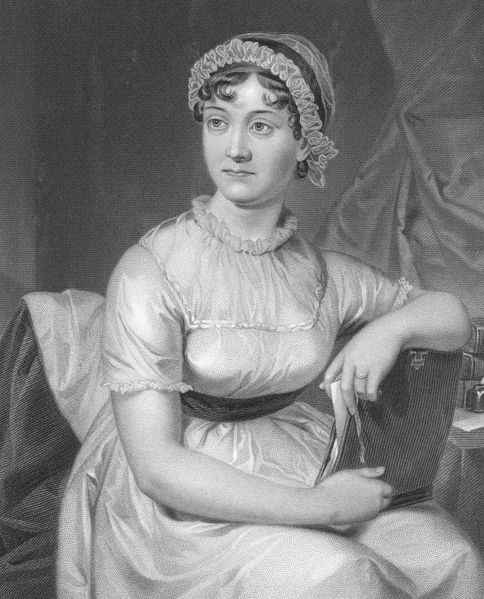
Who remembers the discussion between Jane Fairfax and Mr John Knightley on the subject of letters? In Jane Austen's Emma there's a memorable exchange. Mr John Knightley (the younger Mr Knightley, not the hero of the story) is gently teasing Ms Fairfax, who ventured to the post office in the rain despite her delicate health.
"The post-office has great charm at one period of our lives. When you have lived to my age, you will begin to think letters are never worth going through the rain for."
There was a little blush, and then this answer,
"I must not hope to be ever situated as you are, in the midst of every dearest connection, and therefore I cannot expect that simply growing older should make me indifferent about letters."
"Indifferent! Oh! no - I never conceived you could become indifferent. Letters are no matter of indifference; they are generally a very positive curse."
"You are speaking of letters of business; mine are letters of friendship."
"I have often thought them the worst of the two," replied he coolly. "Business, you know, may bring money, but friendship hardly ever does."
"Ah! you are not serious now. I know Mr. John Knightley too well - I am sure he understands the value of friendship as well as any body. I can easily believe that letters are very little to you, much less than to me, but it is not your being ten years older than myself which makes the difference, it is not age, but situation. You have every body dearest to you always at hand, I, probably, never shall again; and therefore till I have outlived all my affections, a post-office, I think, must always have power to draw me out, in worse weather than to-day."
Lately I've noticed many friends of mine getting upset over this marvel called facebook in a very similar manner as Mr. John Knightley over his letters. I can't get upset. The people who want to get rid of facebook or who think it's a waste of time seem to live at least in the same country as most of their friends. I love every single silly posting of my best friends in Finland.
See, moving out of the country isn't death to family relationships. Those don't disappear nearly as easily as friendships. And so, in order to keep in touch with your friends, what would you do? Write letters, call with skype, send email... only, I never write letters, skype requires two people to be on at the same time which is difficult when the time zones are different, and even email is more often than not left unanswered. What better way to keep in touch than by a social network that shows you your friends' small thoughts - what they ate for dinner, when they are upset, anything they want to post as "status".
So give me your statuses! And comment on mine! I love facebook.
(Oh, election day was yesterday. If you want to hear my thoughts about that, please ask. Otherwise I'll leave it alone.)
Oct 14, 2010
Parent's rights, children's rights

Are you for parent's rights or children's rights?
Sometimes these two seem to be the same thing. Sometimes you can just talk about family values or similar. Surely it's best for the children that the government and everyone else supports parents in their duties in stead of the other way around, right? Right?
Here's the trick, though. All parents don't do what's best for their children. Really. They might think they do, or they just don't think at all. Honestly. I've heard the comments about "who should decide what's best for the children" and I say that sometimes it shouldn't be the parents. And if some parents aren't capable of it then there should be general rules. And that sort of means laws and regulations, and the government dictating at least some things parents can and can't do.
If not the government then who? Those who really want parents to have completely the right to decide over their children's lives need to admit that then there would be no laws against violence against children, or locking them in closets or similar atrocities. Most people feel these things should be forbidden, but are having hard times saying what else could or should be...
I'm for children's rights. I don't know in every case what would be in their best interest. But if parent's rights and children's rights do not meet, I'll go for the children.
Aug 24, 2010
Aging
I haven't been able to write all of July and most of August, mainly because I decided not to make this a baby blog. I will only write about MY baby in facebook. However, this creates a problem: what to write when baby is all you think about?
Yesterday I thought once again about aging... The traumas and the joys. I'm not one of those who is worried about aging because it's cool to be young - it's not, in my mind. The older I get the less insecure, uncertain and, in some cases also, less unhappy I become. Compared with ages 25-28 I'm really happy right now. Still, sometimes you feel a moment of unease. I think it has got to do with what you've accomplished in life so far. We create expectations for us, about how life should be, and about what should be done by a certain age. And sometimes our social circles create those expectations - be the circles in a religious community (many expectations there! I'm not saying however that the religions create the expectations, I think it's really the community), academical circles (equally expecting really) or others. I remember feeling really worried when, at 30, I met a former classmate from Junior High, first time in many years. She had a house, a car, a career, a husband and children. I lived in a rental appartment, had no car (didn't really want a house or a car but still), had almost no career, just a job, and not even a boyfriend let alone a husband and children. I felt like at that age I should have at least something from the list.
A close person to me is having a 40-year crisis, mainly I think because her ambitions have not been fulfilled. With musical ambitions she realizes that she is getting too old to reach them. Some ambitions have a time limit, set by the society. You can't act the roles of young women after a certain age. You can't even become an actor...
How about me? Right now I'm pretty satisfied, having reached the one goal I had with a time limit (having a baby). There are others, but they can wait...
Yesterday I thought once again about aging... The traumas and the joys. I'm not one of those who is worried about aging because it's cool to be young - it's not, in my mind. The older I get the less insecure, uncertain and, in some cases also, less unhappy I become. Compared with ages 25-28 I'm really happy right now. Still, sometimes you feel a moment of unease. I think it has got to do with what you've accomplished in life so far. We create expectations for us, about how life should be, and about what should be done by a certain age. And sometimes our social circles create those expectations - be the circles in a religious community (many expectations there! I'm not saying however that the religions create the expectations, I think it's really the community), academical circles (equally expecting really) or others. I remember feeling really worried when, at 30, I met a former classmate from Junior High, first time in many years. She had a house, a car, a career, a husband and children. I lived in a rental appartment, had no car (didn't really want a house or a car but still), had almost no career, just a job, and not even a boyfriend let alone a husband and children. I felt like at that age I should have at least something from the list.
A close person to me is having a 40-year crisis, mainly I think because her ambitions have not been fulfilled. With musical ambitions she realizes that she is getting too old to reach them. Some ambitions have a time limit, set by the society. You can't act the roles of young women after a certain age. You can't even become an actor...
How about me? Right now I'm pretty satisfied, having reached the one goal I had with a time limit (having a baby). There are others, but they can wait...
Jul 4, 2010
Happy American Independence Day!
In honor of Independence day: I Have a Dream
http://www.youtube.com/watch?v=iEMXaTktUfA&feature=related
Those who might not know the history, on August 28, 1963 Martin Luther King helped organize a massive march on Washington, DC. In DC he gave this speech, considered by many to be the greatest show of American rhetoric ever (there are many other legendary speeches too). In comparison to Finnish politics, rhetorics has always held an important place here in the US. I mostly have a sceptic attitude towards great rhetorical talent, since it can be used for any cause... however, since racism and xenophobia are some of my pet peeves, I have made an exception for Martin Luther King. Here he urges people not to give up until actual equality is gained, and (in my ears) to work and live together in peace. King didn't want people to give in to hate despite all the injustice. However, soon after his assassination there were horrible and violent racial riots especially in California. Too much hatred and he was no longer there to convince people that peace was the solution.
The speech transcribed.
http://www.youtube.com/watch?v=iEMXaTktUfA&feature=related
Those who might not know the history, on August 28, 1963 Martin Luther King helped organize a massive march on Washington, DC. In DC he gave this speech, considered by many to be the greatest show of American rhetoric ever (there are many other legendary speeches too). In comparison to Finnish politics, rhetorics has always held an important place here in the US. I mostly have a sceptic attitude towards great rhetorical talent, since it can be used for any cause... however, since racism and xenophobia are some of my pet peeves, I have made an exception for Martin Luther King. Here he urges people not to give up until actual equality is gained, and (in my ears) to work and live together in peace. King didn't want people to give in to hate despite all the injustice. However, soon after his assassination there were horrible and violent racial riots especially in California. Too much hatred and he was no longer there to convince people that peace was the solution.
The speech transcribed.
Subscribe to:
Posts (Atom)
.jpg)